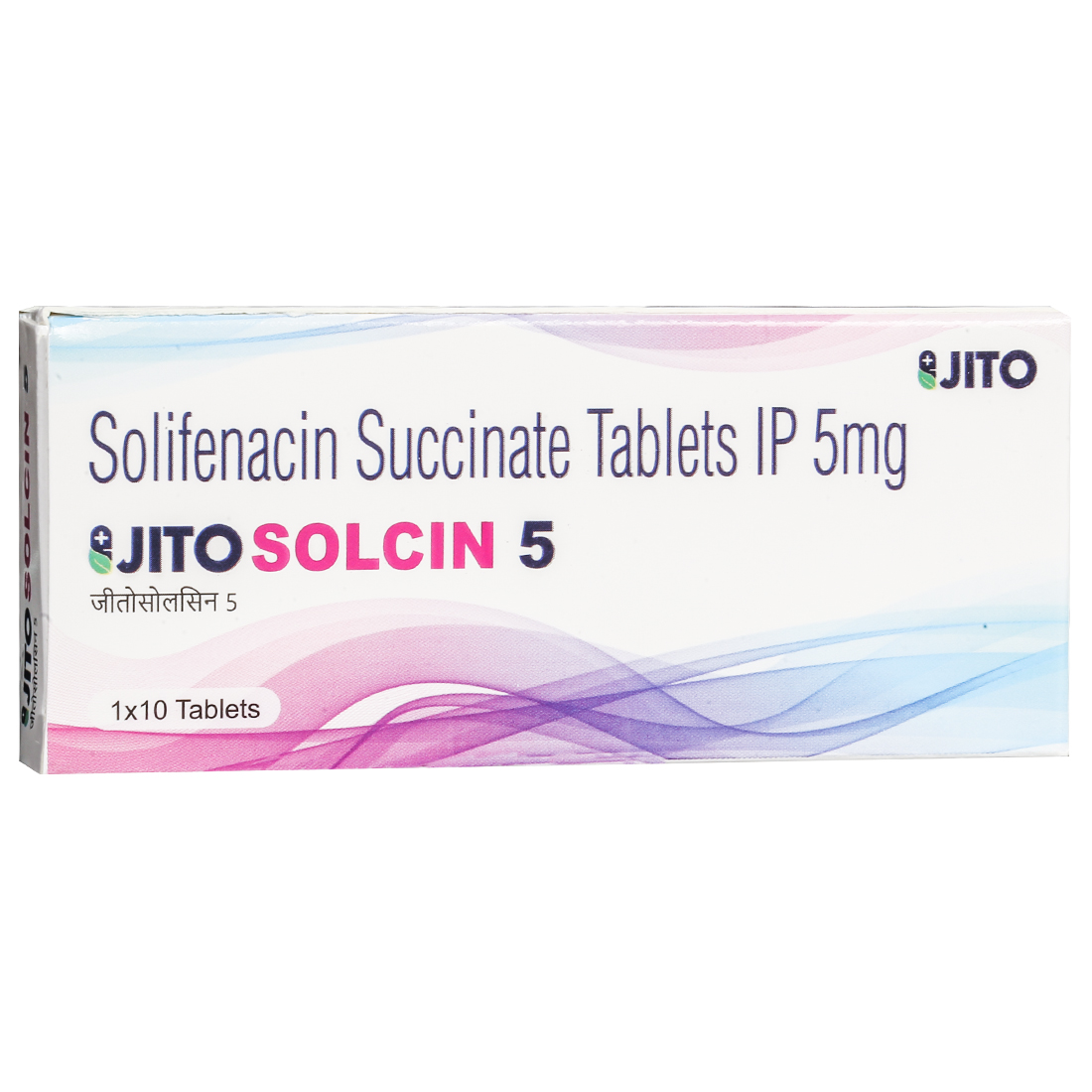
MEDICINE OVERVIEW OF Jitosolcin 5 Tablet (10 Tab)
THERAPEUTIC CLASS OF Jitosolcin 5 Tablet (10 Tab)
WHY Jitosolcin 5 Tablet (10 Tab) IS PRESCRIBED
Substitutes for - Jitosolcin 5 Tablet (10 Tab)
HOW IT WORKS
HOW TO TAKE
WHEN TO TAKE
Jitosolcin 5 Tablet (10 Tab) Warnings
Precautions of Jitosolcin 5 Tablet (10 Tab)
Contraindications of Jitosolcin 5 Tablet (10 Tab)
Side Effects of Jitosolcin 5 Tablet (10 Tab)
Alcohol Interaction
Food to Avoid
Pregnancy/Lactation Protocol
Storage of Jitosolcin 5 Tablet (10 Tab)
- Doctor's Note Required for this item
- Country of Origin: India
- Expires on: Feb 2028
- 14 days Return Policy
- Manufacturer Details
-
Seller Information:
Doctor's Note Required
MRP*:
Rs.241.00
60% OFF
Rs.96.40 (* Inclusive of all taxes)
₹ 9.64/Tablet (inclusive of all taxes)
Jitosolcin 5 Tablet Overview:
Jitosolcin 5 Tablet is a prescription medication used to manage the symptoms of an Overactive Bladder (OAB).
It contains Solifenacin Succinate, a potent antimuscarinic agent that targets the smooth muscles of the bladder to restore urinary control.
Overactive Bladder is a condition characterized by a sudden, intense, and uncontrollable urge to urinate. Jitosolcin 5 is designed to target and treat its three primary symptoms- urinary urgency (the sudden, compelling need to void immediately), urinary frequency (the need to urinate much more often than normal), and urge incontinence (accidental urine leakage following a sudden urge).
To counteract this, Jitosolcin 5 works by targeting and relaxing the smooth muscle in the bladder wall, which directly suppresses involuntary bladder contractions that cause the sudden urge to go.
By reducing this hyperactive muscle activity, Jitosolcin 5 effectively increases the bladder’s total fluid capacity and prolongs the waiting time between the initial sensation and the need to void, ultimately restoring predictable urinary control.
Composition:
Each film coated tablet contains- Solifenacin Succinate: 5 mg and Excipients q.s.
Colours: Ferric Oxide Yellow & Titanium Dioxide.
Uses & Benefits of Jitosolcin 5 Tablet:
Jitosolcin 5 Tablet is primarily used to treat Overactive Bladder (OAB) and its associated symptoms, which include:
- Relieves Urinary Urgency: It controls the sudden, intense, and compelling need to urinate immediately, reducing the anxiety of rushing to a bathroom.
- Reduces Urinary Frequency: It minimizes the constant need to empty the bladder, allowing for normal, less frequent intervals for urination throughout the day and night.
- Prevents Urge Incontinence: It stops accidental, involuntary urine leakage that frequently happens right after a sudden, strong urge to void.
How Does Jitosolcin 5 Tablet Work:
The active ingredient in Jitosolcin 5 Tablet is Solifenacin, which belongs to a class of drugs called anticholinergics or muscarinic receptor antagonists. It works by competitively blocking acetylcholine, a neurotransmitter responsible for signaling muscle contractions, at muscarinic receptors in the bladder wall.
By selectively targeting these receptors, Solifenacin prevents acetylcholine from triggering involuntary spasms of the bladder's smooth muscle, known as the detrusor muscle. This target relaxation effectively stabilizes the bladder, preventing the premature, erratic contractions that cause sudden urinary urgency. This action increases the bladder's capacity to store urine and reduces involuntary contractions. As a result, it helps reduce the sudden urge to urinate, decreases frequent urination, and improves bladder control.
Dosage of Jitosolcin 5 Tablet:
- Usage Direction
Take Jitosolcin 5 Tablet strictly according to your doctor’s instructions, following the prescribed dose and timing. Jitosolcin 5 Tablet should be swallowed whole with water without breaking, chewing, or crushing it, preferably at the same time each day. Do not stop or alter the dose of Jitosolcin 5 Tablet without consulting your doctor, as this may prevent you from achieving the desired outcome. If you are unsure about the administration procedures of Jitosolcin 5, consult with your doctor or pharmacist.
- Missed Dose
If you miss a dose of Jitosolcin 5 Tablet, take it as soon as you remember on the same day. But, if it is almost time for your next scheduled dose, skip the one you missed and continue following your regular dosing schedule. Do not attempt to take two doses if you have forgotten one. If you often forget to take your medication, consult with your doctor to re-evaluate your dosing schedule. Frequently missing doses could lead to undesired outcomes.
You can set reminders on your smartphone, keep drug organizer boxes, or use other audio-visual technologies to prevent missing a dose.
- Overdose
If you accidentally take Jitosolcin 5 Tablet more than your prescribed dose, seek immediate medical attention or go to the nearest hospital for further advice. Symptoms of overdose may include dry mouth, headache, blurred vision, hallucination, seizure, dilated pupils, or rapid heartbeat.
Contraindications of Jitosolcin 5 Tablet:
Do not take Jitosolcin 5 Tablet if you are allergic to Solifenacin or any other ingredients of this medicine. The medication is strictly contraindicated for patients with severe liver or kidney impairment, including those undergoing dialysis.
This medication must be avoided by patients suffering from urinary retention (an inability to empty the bladder) or gastric retention and other severe gastrointestinal obstructive conditions, such as toxic megacolon.
It should not be prescribed to individuals with uncontrolled narrow-angle glaucoma or the chronic neuromuscular disorder myasthenia gravis.
Furthermore, Jitosolcin 5 is strictly contraindicated for patients with severe liver disease or advanced kidney impairment, including those undergoing active dialysis treatments.
Additionally, this medication is strictly contraindicated for use in children, as its safety and efficacy have not been established for younger populations.
Precautions & Warnings of Jitosolcin 5 Tablet:
Before starting Jitosolcin 5 Tablet, it is vital to provide your healthcare provider with a complete medical history. Inform your doctor if you have mild-to-moderate kidney or liver impairment.
Caution is advised for patients with bladder outflow obstructions or obstructive gastrointestinal disorders, as these conditions require close monitoring.
Furthermore, individuals with a history of rare cardiac abnormalities—specifically QT prolongation or other heart rhythm disorders—must thoroughly consult their physician to evaluate potential risks before beginning therapy.
Side Effects of Jitosolcin 5 Tablet
Jitosolcin 5 Tablet may cause various side effects, the majority of which are mild to moderate and typically temporary. The most common symptoms include dry mouth, blurred vision, dizziness, and generalized tiredness. Gastrointestinal disturbances such as nausea, constipation, and associated abdominal pain are also frequently documented, alongside an increased risk of developing a urinary tract infection.
While these common symptoms are generally manageable, it is essential to seek immediate, emergency medical attention if you experience signs of a severe systemic allergic reaction. Critical warning signs include the sudden onset of severe itching, hives, or skin rashes, as well as breathing difficulties and swelling of the face, mouth, lips, or tongue.
Safety Related Concerns of Jitosolcin 5 Tablet:
- Pregnancy
Jitosolcin 5 Tablet should be used with caution during pregnancy, as limited data exist regarding the safety in pregnant women. If you are pregnant or planning to become pregnant, talk to your doctor before taking this medication to weigh the benefits against potential risks to the developing baby
- Breastfeeding
It is better to avoid the use of the Jitosolcin 5 Tablet while breastfeeding, since it is unknown whether Solifenacin could pass into the breast milk and affect the breastfed child. Therefore, consulting with your doctor before taking Jitosolcin 5 is crucial.
- Alcohol
Avoid or limit the consumption of alcohol while taking Jitosolcin 5 Tablet. Combining alcohol with this medication can significantly increase its side effects, such as drowsiness or drowsiness.
- Food Interactions
Jitosolcin 5 Tablet can be taken with or without food, as directed by your healthcare professional. While there are no known direct interactions between this medication and specific foods, certain dietary adjustments could help manage an overactive bladder.
It may be advised to limit or avoid known bladder irritants that can independently trigger spasms and exacerbate OAB symptoms. These irritants include caffeinated beverages, carbonated or sugary drinks, alcohol, and highly acidic items like citrus fruits. Avoiding these triggers can enhance the effectiveness of the treatment and improve overall bladder control.
- Drug Interactions
Jitosolcin 5 Tablet can interact with various medications, either by changing their effectiveness or increasing the risk of toxicity. It is crucial to inform your healthcare provider if you are taking other anticholinergic medicines (such as atropine, oxybutynin, hydroxyzine, bupropion, dextromethorphan), as it may increase the effects or side effects of both medicines.
Medicines like carbachol and pilocarpine can reduce the effect of Solifenacin. Conversely, Solifenacin can reduce the effect of medicines, such as metoclopramide and cisapride.
Furthermore, ketoconazole, ritonavir, nelfinavir, itraconazole, verapamil, and diltiazem decrease the absorption rate of Solifenacin. Whereas rifampicin, phenytoin, and carbamazepine may increase the rate of absorption of Solifenacin.
Always inform your healthcare provider and pharmacist about all medications you are taking, including prescription drugs, over-the-counter medications, vitamins, minerals, and herbal supplements, to avoid potential interactions.
- Using Machinery & Driving
Jitosolcin 5 Tablet may cause side effects, such as blurred vision or drowsiness. Exercise caution and avoid these activities until you are certain you can perform them safely.
Storage of Jitosolcin 5 Tablet:
Store protected from moisture, at a temperature not exceeding 25°C. Keep out of reach of children.
Avoid using it after the expiry date, printed on the packaging. Dispose of expired or unused medication properly; do not throw it away casually.
Additional Information:
- Train your bladder by urinating on a set schedule. Gradually increase the time intervals between your bathroom visits to help stretch the bladder walls and strengthen your bladder control.
- Certain foods and drinks can independently trigger bladder spasms. Try to limit or completely avoid caffeine, carbonated beverages, spicy foods, and artificial sweeteners to prevent sudden urges.
- While cutting back on water might seem like a smart way to stop running to the bathroom, dehydration actually makes things worse. Less fluid leads to highly concentrated urine, which severely irritates the bladder lining and triggers intense urgency.
- Do not suddenly stop your medication unless your doctor specifically tells you to.
- Do not share your medicine with someone else having the same symptoms as you.
Frequently Asked Questions (FAQs):
Q. What does Jitosolcin 5 Tablet do?
A. Jitosolcin 5 Tablet is primarily prescribed to treat the symptoms of an Overactive Bladder (OAB). As a muscarinic receptor antagonist, it functions by relaxing the smooth muscles of the urinary bladder and suppressing involuntary bladder contractions. This selective muscle relaxation effectively increases the bladder's total capacity to store urine. By stabilizing bladder activity, the medication successfully manages the three major symptoms of OAB: urinary urgency (the sudden, compelling need to urinate immediately), urinary frequency (needing to empty the bladder much more often than usual), and urge incontinence (accidental urine leakage following a sudden urge).
Q. How long does it take for Jitosolcin 5 Tablet to start working?
A. While some patients may notice an initial improvement in their symptoms within the first few days, it typically takes several weeks of consistent daily use to experience the full therapeutic effect of the medication. To ensure maximum effectiveness, it is essential to follow the exact dosage and schedule prescribed by your physician. The precise time frame for noticeable improvement can vary based on an individual’s overall health, accompanying lifestyle modifications (such as dietary changes), and how responsively their body reacts to the active ingredient.
Q. Can I stop taking Jitosolcin 5 Tablet once my symptoms improve?
A. No, you should not stop taking this medication without consulting your doctor or urologist, even if you feel completely better. Jitosolcin 5 manages the symptoms of an overactive bladder rather than permanently curing the underlying condition. If you stop taking it prematurely, your involuntary bladder contractions will likely return, causing your sudden urgency, frequency, and leakage to reappear.
Q. Does Jitosolcin 5 Tablet cause weight gain?
A. No, weight gain is not a commonly reported side effect of Solifenacin, the active ingredient in Jitosolcin 5 Tablet. However, because the medication can lead to constipation (which can cause temporary bloating), some patients might feel a slight change. If you notice rapid or unexpected weight gain, it is best to discuss it with your healthcare provider to rule out other factors.
Q. What should I do if I experience a severe dry mouth while taking this medicine?
A. Dry mouth is the most common side effect of anticholinergic medications like Jitosolcin 5 because they temporarily reduce salivary secretions. To manage this comfortably, you can sip water frequently throughout the day, chew sugar-free gum, or suck on sugar-free hard candies to stimulate saliva production. Avoiding alcohol, caffeine, and tobacco can also keep your mouth from drying out further. If the dryness becomes unmanageable or affects your swallowing, let your doctor know.
References:
1. Package leaflet: Information for the patient. Solifenacin succinate 5 mg film-coated tablets / Solifenacin succinate 10 mg film-coated tablets. solifenacin succinate. Last Revised: March 2025. Accessed on: 11th June 2026. Click Here
2. Labeling Information. VESIcare® (solifenacin succinate) Tablets. Last Revised: April 2010. Accessed on: 11th June 2026. Click Here
3. Patient Information. VESIcare® (VES-ih-care) (solifenacin succinate) Tablet. Last Revised: October 2022. Accessed on: 11th June 2026. Click Here
Disclaimer: The information on this site is not intended or implied to be a substitute for professional medical advice, diagnosis or treatment. All content, including text, graphics and information, contained on or available through this website is for general information purposes only. SastaSundar.com makes no representation and assumes no responsibility for the accuracy of information contained on or available through this website and such information is subject to change without notice. You are encouraged to confirm any information obtained from or through this web site with other sources and review all information regarding any medical condition or treatment with your physician. NEVER DISREGARD PROFESSIONAL MEDICAL ADVICE OR DELAY SEEKING MEDICAL TREATMENT BECAUSE OF SOMETHING YOU HAVE READ ON OR ACCESSED THROUGH ANY WEBSITE.
SastaSundar.com does not recommend, endorse or make any representation about the efficacy, appropriateness or suitability of any specific products, procedures, treatments, opinions or other information that may be contained on or available through this website.