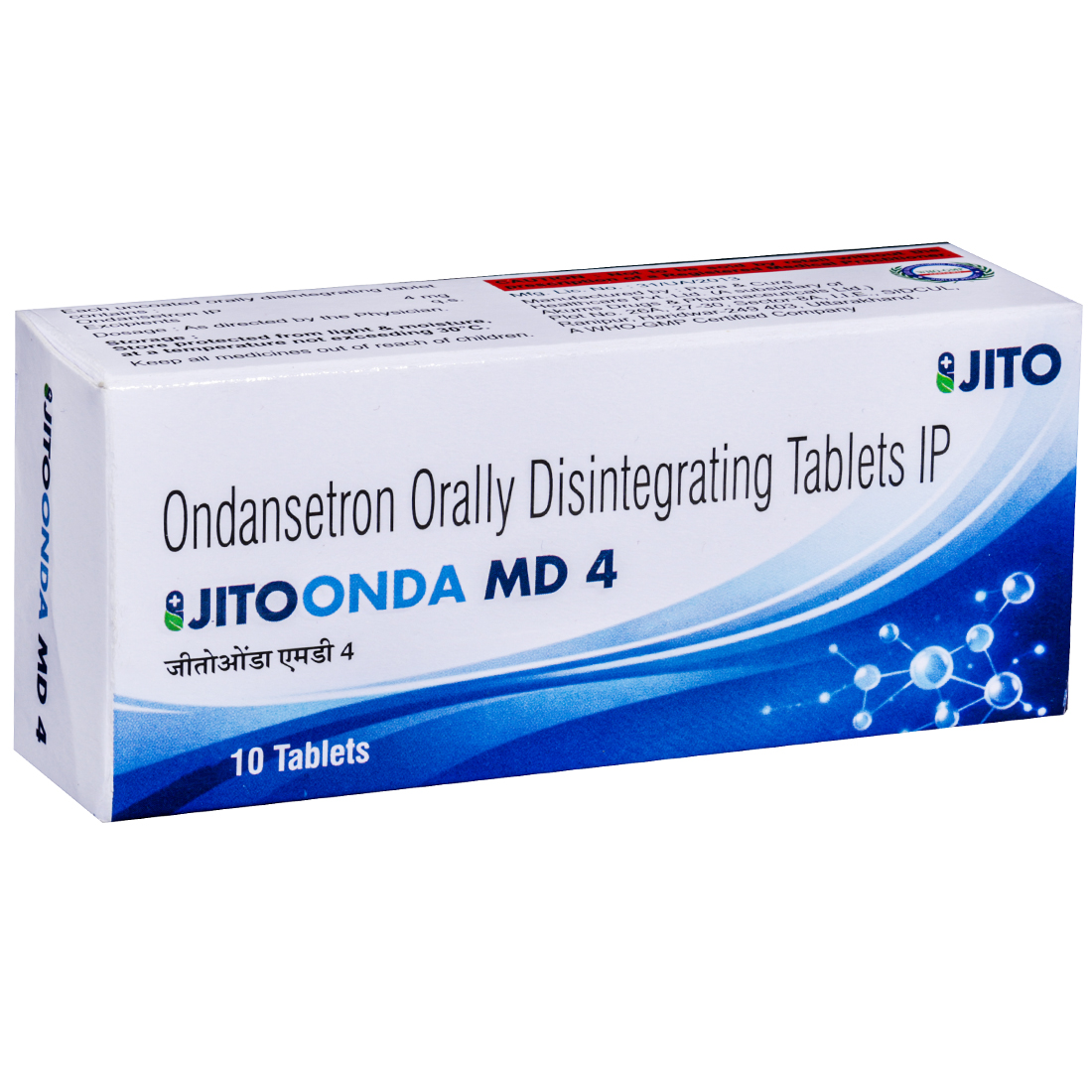
MEDICINE OVERVIEW OF Jitoonda MD 4 Tablet (10 Tab)
THERAPEUTIC CLASS OF Jitoonda MD 4 Tablet (10 Tab)
WHY Jitoonda MD 4 Tablet (10 Tab) IS PRESCRIBED
Substitutes for - Jitoonda MD 4 Tablet (10 Tab)
HOW IT WORKS
HOW TO TAKE
WHEN TO TAKE
Jitoonda MD 4 Tablet (10 Tab) Warnings
Precautions of Jitoonda MD 4 Tablet (10 Tab)
Contraindications of Jitoonda MD 4 Tablet (10 Tab)
Side Effects of Jitoonda MD 4 Tablet (10 Tab)
Alcohol Interaction
Food to Avoid
Pregnancy/Lactation Protocol
Storage of Jitoonda MD 4 Tablet (10 Tab)
- Doctor's Note Required for this item
- Country of Origin: India
- Expires on: May 2028
- 14 days Return Policy
- Manufacturer Details
-
Seller Information:
Doctor's Note Required
MRP*:
Rs.49.00
60% OFF
Rs.19.60 (* Inclusive of all taxes)
₹ 1.96/Tablet (inclusive of all taxes)
Jitoonda MD 4 Tablet Overview:
Jitoonda MD 4 Tablet is an antiemetic medicine used for the treatment of nausea and vomiting induced by cytotoxic cancer chemotherapy and radiotherapy.
It is also used for the prevention and management of post-operative nausea and vomiting (PONV) following surgical procedures.
Jitoonda MD 4 Tablet contains Ondansetron, which belongs to a class of drugs known as serotonin 5-HT3 receptor antagonists. It works by blocking the chemical signals in the body that trigger the vomiting reflex, providing immediate and reliable relief from sickness.
Composition:
Each uncoated orally disintegrating tablet contains- Ondansetron: 4 mg and Excipients q.s.
Uses & Benefits of Jitoonda MD 4 Tablet:
Jitoonda MD 4 Tablet is primarily used for the treatment and prevention of the following medical conditions:
- Chemotherapy-Induced Nausea and Vomiting (CINV): It effectively alleviates and prevents severe nausea and vomiting triggered by cytotoxic cancer medicines, helping patients tolerate their oncological treatments comfortably.
- Radiation-Induced Nausea and Vomiting (RINV): It manages and reduces gastric distress and the urge to vomit caused by high-energy radiation therapies.
- Post-Operative Nausea and Vomiting (PONV): It prevents and relieves the distressing sensations of sickness and vomiting experienced by patients following surgical operations and the administration of general anesthesia.
How Does Jitoonda MD 4 Tablet Work:
During surgeries, chemotherapy, or radiation treatments, the body releases a natural chemical messenger called serotonin (5-HT). This release triggers specific serotonin (5-HT3) receptors in both the gut and the vomiting center of the brain (the Chemoreceptor Trigger Zone, or CTZ), triggering nausea and the urge to vomit.
The active ingredient in Jitoonda MD 4 Tablet, Ondansetron, works by selectively blocking these serotonin (5-HT3) receptors. By intercepting these chemical distress signals before they reach the brain or affect the gut, the medicine effectively prevents the vomiting reflex and reduces the feeling of sickness.
Dosage of Jitoonda MD 4 Tablet:
- Usage Direction
Take Jitoonda MD 4 Tablet exactly as advised by your doctor, following the prescribed dose and timing. Jitoonda MD 4 Tablet should be dissolved in the mouth and swallowed with saliva; water is not required. Do not chew or crush the tablet; preferably, take it at the same time each day. Do not stop or alter the dose of Jitoonda MD 4 Tablet without consulting your doctor, as this may prevent you from achieving the desired outcome. If you're not sure about how to take Jitoonda MD 4 Tablet, consult with your doctor or pharmacist.
- Missed Dose
If you miss a dose of Jitoonda MD 4 Tablet, take it as soon as you remember on the same day. But, if it is almost time for your next scheduled dose, skip the one you missed and continue following your regular dosing schedule. Avoid taking two doses if you realize you've missed one. If you often frequently forget your medication, consult your doctor to reassess your dosing plan. Missing doses frequently can lead to undesired outcomes.
To prevent missing a dose, you might set reminders on your smartphone, use medication organizer boxes, or use other audio-visual technologies.
- Overdose
If you accidentally take Jitoonda MD 4 Tablet more than your prescribed dose, seek immediate medical attention or contact a poison control center. An overdose can cause symptoms like transient vision disturbances, severe constipation, low blood pressure (dizziness, faintness), or abnormal heart rhythm.
Contraindications of Jitoonda MD 4 Tablet:
Do not take Jitoonda MD 4 Tablet if you have a known allergy or hypersensitivity to Ondansetron or any other ingredients present in this medicine.
Additionally, this medication must never be used concomitantly with apomorphine, a drug commonly prescribed to treat Parkinson's disease. Co-administration of these two medications can trigger severe, life-threatening drops in blood pressure and loss of consciousness.
Precautions & Warnings of Jitoonda MD 4 Tablet:
Before starting Jitoonda MD 4 Tablet, it is essential to consult your healthcare provider and thoroughly discuss your complete medical history. Patients with severe liver impairment must inform their doctor before use, as reduced hepatic clearance requires strict daily dose limits.
Use with extreme caution if you have a history of heart failure, irregular heartbeats, Congenital Long QT Syndrome, or uncorrected electrolyte imbalances (low blood potassium or magnesium), as these significantly increase cardiac risks.
Additionally, this medication alters gut motility and can mask symptoms of a progressive bowel obstruction or gastric distension. Patients should also be monitored for serotonin syndrome, a rare but life-threatening condition associated with this class of drugs.
Side Effects of Jitoonda MD 4 Tablet:
Jitoonda MD 4 Tablet may cause certain side effects. Most of these are mild to moderate in intensity and typically disappear as your body adjusts to the medication. Common side effects include headaches, constipation or diarrhea, fatigue, drowsiness, and flushing (a sudden sensation of warmth).
However, certain rare but serious side effects require immediate intervention. Discontinue the medication and seek emergency medical care if you experience chest pain, an uneven heartbeat, a severe drop in blood pressure, hiccups, blurred vision, or temporary vision loss. You should also seek immediate medical attention if you develop signs of a severe allergic reaction, such as a skin rash, hives, swelling of the face, lips, tongue, or eyelids, or sudden collapse.
Safety Related Concerns of Jitoonda MD 4 Tablet:
- Pregnancy
Jitoonda MD 4 Tablet is generally not recommended during pregnancy due to a potential minor risk of oral clefts (fetal defects in the baby's mouth/face) unless explicitly deemed essential by your doctor. If you are pregnant, suspect you might be pregnant, or are actively planning a pregnancy, consult your doctor immediately to discuss safer alternatives for managing nausea.
- Breastfeeding
It is recommended to avoid using Jitoonda MD 4 Tablet while breastfeeding, since small amounts Ondansetron may pass into breast milk and affect the breastfed child. Therefore, consulting with your doctor before taking Jitoonda MD 4 Tablet is crucial.
- Alcohol
While there is no known fatal interaction between Jitoonda MD 4 Tablet and alcohol, it is strongly advised to avoid or limit alcohol consumption during treatment. Alcohol can enhance the severity of side effects, such as dizziness and drowsiness.
- Food Interactions
There are no significant food interactions associated with Jitoonda MD 4 Tablet, meaning it can be taken safely either with or without meals.
However, to ensure overall therapeutic safety and comfort, patients with severe food allergies, complex dietary restrictions, or underlying gastrointestinal conditions should discuss their dietary habits with a healthcare professional before starting the medication.
- Drug Interactions
Jitoonda MD 4 Tablet can interact with various medications, either by compromising their effectiveness or increasing the risk of toxicity. Co-administration with apomorphine is strictly contraindicated due to the risk of severe hypotension and loss of consciousness.
Caution is strongly advised when combining this medication with antiarrhythmics like amiodarone or certain oncological therapies like trastuzumab, as concurrent use can exacerbate heart rhythm risks (QT interval prolongation).
Concomitant use with serotonergic agents, such as selective serotonin reuptake inhibitors (SSRIs) and serotonin-norepinephrine reuptake inhibitors (SNRIs), significantly increases the risk of developing serotonin syndrome, a rare but life-threatening condition.
Additionally, enzyme-inducing drugs like carbamazepine, phenytoin, and rifampicin may accelerate the clearance of Ondansetron, reducing its efficacy. While concurrent use with tramadol may diminish the analgesic effects of that medication.
Always inform your healthcare provider of all current prescription medications, over-the-counter drugs, and herbal supplements before beginning treatment.
- Using Machinery & Driving
Jitoonda MD 4 Tablet usually doesn't affect driving abilities. However, certain side effects, such as blurred vision, fatigue, or drowsiness, may occur. Do not drive or operate heavy machinery until you are completely sure of how this medication affects your alertness.
Storage of Jitoonda MD 4 Tablet:
Store protected from light and moisture, at a temperature not exceeding 30°C. Keep out of reach of children.
Avoid using it once the expiry date on the packaging has been reached. Properly dispose of any expired or unused medications; do not throw it away casually.
Additional Information:
- To complement the medicine, consume small, frequent meals rather than large portions. Avoid greasy, heavily spiced, or highly aromatic foods that trigger nausea.
- To avoid dehydration caused by vomiting, make sure to sip on clear fluids or water consistently throughout the day.
- If you happen to vomit the tablet within one hour of taking it, take the same dose again.
- Do not suddenly stop your medication unless your doctor specifically tells you to.
- Do not give your medicine to someone else who has the same symptoms.
Frequently Asked Questions (FAQs):
Q: What is the purpose of Jitoonda MD 4 Tablet?
A: Jitoonda MD 4 Tablet is used to prevent and manage severe nausea and vomiting. It is commonly prescribed to control symptoms induced by cancer treatments, such as chemotherapy and radiotherapy, as well as to prevent post-operative nausea and vomiting following surgical procedures
Q: Is Jitoonda MD 4 Tablet a steroid?
A: No, Jitoonda MD 4 Tablet is not a steroid. It is a non-steroidal antiemetic prescription medication that belongs to the drug class known as selective 5-HT3 receptor antagonists. While steroids are sometimes co-prescribed with antiemetics to enhance nausea control during chemotherapy, Jitoonda MD 4 works independently by blocking specific serotonin signals in the brain and gut to stop the vomiting reflex.
Q: Can I take Jitoonda MD 4 for motion sickness or sea sickness?
A: No, Jitoonda MD 4 Tablet is not effective for motion sickness or seasickness. The active ingredient, Ondansetron, specifically targets serotonin pathways associated with cellular damage from chemotherapy, radiation, and surgical anesthesia. When experiencing motion sickness, a different neurological pathway in the inner ear is activated, involving histamine and acetylcholine receptors, which requires different classes of medication, such as antihistamines or anticholinergics.
Q: Can Jitoonda MD 4 Tablet cause constipation?
A: Yes, constipation is one of the most common, well-documented side effects of selective 5-HT3 receptor antagonists like Ondansetron. The medication works by blocking serotonin receptors, which are heavily present in the gastrointestinal tract, thereby slowing down bowel motility. To help manage this symptom, drink plenty of fluids and increasing dietary fiber.
Q: Can I give Jitoonda MD 4 Tablet to a child?
A: Jitoonda MD 4 Tablet can be used in pediatric patients, but it must be administered strictly under the guidance of a pediatrician. The dosage for children is carefully calculated based on their body weight or body surface area, rather than the standard adult dosing guidelines. Never self-medicate a child with this drug.
References:
1. ZOFRAN ODT (ondansetron) orally disintegrating tablets. HIGHLIGHTS OF PRESCRIBING INFORMATION. Last Revised: October 2016. Accessed on: 27th July 2026. Click Here
2. Ondansetron 4 mg and 8 mg film-coated tablets. Package leaflet: Information for the patient. Last Revised: July 2022. Accessed on: 27th July 2026. Click Here
3. Ondansetron 4 mg and 8 mg film-coated tablets. Ondansetron Hydrochloride Dihydrate. Package leaflet: information for the user. Last Revised: December 2015. Accessed on: 27th July 2026. Click Here
4. APO-ONDANSETRON (4mg and 8mg tablets). Last Revised: 23 June 2020. Accessed on: 27th July 2026. Click Here
Disclaimer: The information on this site is not intended or implied to be a substitute for professional medical advice, diagnosis or treatment. All content, including text, graphics and information, contained on or available through this website is for general information purposes only. SastaSundar.com makes no representation and assumes no responsibility for the accuracy of information contained on or available through this website and such information is subject to change without notice. You are encouraged to confirm any information obtained from or through this web site with other sources and review all information regarding any medical condition or treatment with your physician. NEVER DISREGARD PROFESSIONAL MEDICAL ADVICE OR DELAY SEEKING MEDICAL TREATMENT BECAUSE OF SOMETHING YOU HAVE READ ON OR ACCESSED THROUGH ANY WEBSITE.
SastaSundar.com does not recommend, endorse or make any representation about the efficacy, appropriateness or suitability of any specific products, procedures, treatments, opinions or other information that may be contained on or available through this website.