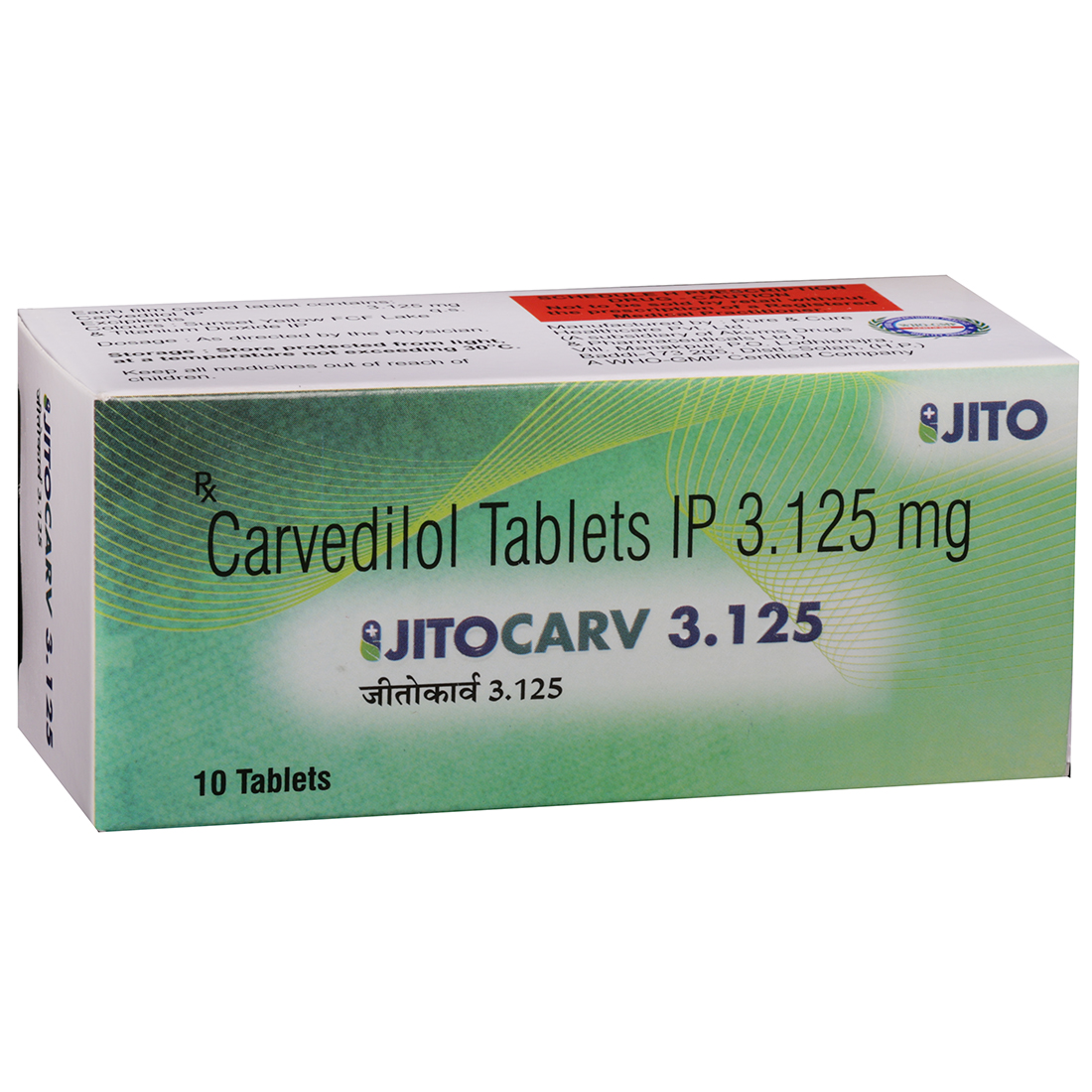
MEDICINE OVERVIEW OF Jitocarv 3.125 Tablet (10 Tab)
THERAPEUTIC CLASS OF Jitocarv 3.125 Tablet (10 Tab)
WHY Jitocarv 3.125 Tablet (10 Tab) IS PRESCRIBED
Substitutes for - Jitocarv 3.125 Tablet (10 Tab)
HOW IT WORKS
HOW TO TAKE
WHEN TO TAKE
Jitocarv 3.125 Tablet (10 Tab) Warnings
Precautions of Jitocarv 3.125 Tablet (10 Tab)
Contraindications of Jitocarv 3.125 Tablet (10 Tab)
Side Effects of Jitocarv 3.125 Tablet (10 Tab)
Alcohol Interaction
Food to Avoid
Pregnancy/Lactation Protocol
Storage of Jitocarv 3.125 Tablet (10 Tab)
- Doctor's Note Required for this item
- Country of Origin: India
- Expires on: Apr 2028
- 14 days Return Policy
- Manufacturer Details
-
Seller Information:
Doctor's Note Required
MRP*:
Rs.36.00
60% OFF
Rs.14.40 (* Inclusive of all taxes)
₹ 1.44/Tablet (inclusive of all taxes)
Jitocarv 3.125 Tablet Overview:
Jitocarv 3.125 Tablet is a beta-blocker medication primarily used to treat cardiovascular conditions, such as angina, congestive heart failure, and hypertension.
Jitocarv contains Carvedilol, a non-selective beta-blocker with additional vasodilatory properties that works by relaxing blood vessels while simultaneously slowing the heart rate and reducing the force of cardiac contractions.
Its dual action helps manage hypertension and various cardiovascular conditions when used under medical supervision
Jitocarv 3.125 Tablet is also used in left ventricular dysfunction following myocardial infarction and for the management of essential hypertension, either alone or in combination with other antihypertensive agents.
Composition:
Each film coated tablet contains- Carvedilol: 3.125 mg and Excipients q.s.
Colour: Sunset Yellow FCF Lake & Titanium Dioxide.
Uses & Benefits of Jitocarv 3.125 Tablet:
Jitocarv 3.125 Tablet is prescribed for the conditions listed below:
- Chronic Stable Angina: By reducing the heart's oxygen demand and workload, it helps manage and prevent episodes of chest pain (angina) caused by reduced blood flow to the heart muscle.
- Post-Myocardial Infarction (Heart Attack): To reduce cardiovascular mortality in clinically stable patients who have survived the acute phase of a heart attack.
- Chronic Heart Failure: Used in patients with a left ventricular ejection fraction of less than 40% (with or without symptomatic heart failure) to stabilize heart function and lower the risk of hospitalization.
- Hypertension: To lower high blood pressure, helping to prevent future strokes, heart attacks, and kidney problems.
How Does Jitocarv 3.125 Tablet Work:
Jitocarv 3.125 Tablet contains Carvedilol, a non-selective beta-blocker with additional alpha-1 blocking activity. It works through a dual mechanism to support cardiovascular health.
By blocking alpha-1 receptors, Jitocarv relaxes and widens blood vessels, reducing peripheral vascular resistance and helping lower blood pressure. At the same time, it blocks beta receptors, reducing the effects of stress hormones such as adrenaline on the heart. This slows the heart rate and decreases the force of cardiac contractions.
Together, these actions reduce the heart's workload and oxygen demand, allowing the heart to pump blood more efficiently. As a result, Jitocarv 3.125 Tablet is commonly used in the management of hypertension, chronic heart failure, and other cardiovascular conditions, helping improve overall heart function and long-term cardiovascular outcomes when used under medical supervision.
Dosage of Jitocarv 3.125 Tablet
- Usage Direction
Jitocarv 3.125 Tablet should be taken strictly as per the doctor’s advice, following the prescribed dose and timing. Jitocarv 3.125 Tablet should be swallowed whole with water and do not crush, chew or break the tablet. Take Jitocarv 3.125 Tablet preferably at the same time each day. Do not stop or alter the dose of Jitocarv 3.125 without consulting your doctor, as this may prevent you from achieving the desired outcome. If you are unsure about the administration procedures of this medication, consult with your doctor or pharmacist.
- Missed Dose
If you miss a dose of Jitocarv 3.125 Tablet, take it as soon as you remember on the same day. But, if it is almost time for your next scheduled dose, skip the one you missed and continue following your regular dosing schedule. Do not attempt to take two doses if you have forgotten one. If you often forget to take your medication, consult with your doctor to re-evaluate your dosing schedule. Frequently missing doses could lead to undesired outcomes.
Never stop taking this medication abruptly; suddenly stopping can cause a dangerous rebound spike in blood pressure, worsen chest pain, or trigger severe cardiac events. Any adjustment or discontinuation of therapy must be done gradually under strict medical supervision.
You can set reminders on your smartphone, keep drug organizer boxes, or use other audio-visual technologies to prevent missing a dose.
- Overdose
If you accidentally take Jitocarv 3.125 Tablet more than your prescribed dose, seek immediate medical advice or go to a nearby hospital. An overdose can cause severe low blood pressure, a dangerously slow heart rate, dizziness, fainting, or difficulty breathing.
Contraindications of Jitocarv 3.125 Tablet:
Do not take Jitocarv 3.125 Tablet if you are allergic to Carvedilol or any of its ingredients. This medicine is not suitable for patients with severe liver impairment, bronchial asthma, COPD with wheezing, or other serious breathing disorders.
Jitocarv should also be avoided in individuals with certain heart conditions, including very slow heart rate (severe bradycardia), heart block (2nd or 3rd-degree AV block unless a pacemaker is present), cardiogenic shock, very low blood pressure, or severe and unstable heart failure requiring intravenous treatment. Patients with significant heart rhythm abnormalities should inform their doctor before starting therapy.
Precautions & Warnings of Jitocarv 3.125 Tablet:
Before taking Jitocarv 3.125 Tablet, it is important to consult a healthcare provider and discuss your complete medical history, particularly if you have pre-existing kidney disease, thyroid disorders (such as hyperthyroidism), or underlying cardiac conditions.
For individuals with diabetes, use extra caution; Carvedilol can mask the classic autonomic warning signs of low blood sugar (hypoglycemia), such as a rapid heart rate, tremors, or palpitations. Because these crucial warning signs may get suppressed, diabetic patients must monitor their blood glucose levels closely to prevent undetected, severe hypoglycemic episodes.
Jitocarv 3.125 must be used with caution in patients with chronic lung disease, high blood pressure, severe chest pain (angina), or recovering from a heart attack, especially elderly individuals, must be monitored closely.
Side Effects of Jitocarv 3.125 Tablet:
Jitocarv 3.125 Tablet can cause side effects, though most are mild and temporary as your body adjusts. Common symptoms include mild headaches, dizziness, fatigue, tiredness, muscle weakness, constipation, and dry eyes. It can also cause low blood pressure, lightheadedness, a slow heartbeat (bradycardia), or minor fainting spells, especially when standing up too quickly.
Some side effects require immediate medical evaluation as they may indicate a change in heart or kidney function. Contact your healthcare provider if you experience sudden weight gain, fluid retention (swelling in the ankles or feet), or shortness of breath and chest pain.
Though rare, certain severe symptoms demand immediate emergency medical attention. Seek urgent care if you develop signs of a severe allergic reaction (such as swelling of the face, lips, tongue, or neck causing difficulty breathing or swallowing) or severe skin reactions, including unexplained blisters and sores on the skin, mouth, eyes, or genitals.
Safety Related Concerns of Jitocarv 3.125 Tablet:
- Pregnancy
Jitocarv 3.125 Tablet is generally not recommended during pregnancy unless clearly needed and prescribed by a doctor, as limited data exist regarding its safety in pregnant women. If you are pregnant or planning to become pregnant, talk to your doctor before taking this medication to weigh the benefits against potential risks to the developing baby.
- Breastfeeding
It is better to avoid the use of the Jitocarv 3.125 Tablet while breastfeeding, since it is unknown whether the active ingredient could pass into the breast milk and affect the breastfed child. Therefore, consulting with your doctor before taking Jitocarv 3.125 Tablet is crucial.
- Alcohol
Avoid consuming alcohol while taking Jitocarv 3.125 Tablet, as it can enhance the blood-pressure-lowering effect of the medication. This can lead to severe dizziness, fainting, or headaches.
- Food Interactions
Jitocarv 3.125 Tablet can be taken with or without food, but taking it with food is beneficial as it slows absorption and reduces the risk of postural dizziness. However, it is vital to maintain a heart-healthy diet with balanced dietary habits. To support the medication's efficacy, it is vital to maintain a balanced, heart-healthy diet low in saturated fats and cholesterol to prevent heart failure. Avoid salt substitutes such as sodium (commercial salts) or high-sodium-containing food, as they can lead to dangerously elevated potassium levels in the blood when combined with beta-blockers.
Additionally, your physician may suggest you avoid excessive consumption of grapefruit juice, as it can interfere with the enzymes that break down the medication, potentially altering drug concentrations in your body.
- Drug Interactions
Jitocarv 3.125 Tablet can interact with various medications, which may either compromise their effectiveness or increase the risk of serious side effects. Concomitant use of CYP2D6 isoenzyme inhibitors—such as quinidine, fluoxetine, paroxetine, and propafenone—can alter the metabolism of this drug, leading to elevated concentrations of Carvedilol in the bloodstream.
Furthermore, patients taking Carvedilol alongside catecholamine-depleting agents like reserpine, or Monoamine Oxidase Inhibitors (MAOIs), must be monitored exceptionally closely for clinical signs of profound hypotension or severe bradycardia.
It is essential to inform your physician if you are taking other cardiovascular medications, such as digoxin or calcium channel blockers (e.g., diltiazem or verapamil), as these combinations can dangerously slow the heart rate or disturb cardiac conduction. Similarly, concurrent administration of nonsteroidal anti-inflammatory drugs (NSAIDs) like ibuprofen can reduce the blood-pressure-lowering efficacy of Carvedilol.
Special caution and dosage adjustments may also be required if you are taking diabetes medications (insulin or oral hypoglycemic agents), as Carvedilol can enhance their blood-sugar-lowering effects and mask the physical warning signs of hypoglycemia.
Additionally, interactions can occur with diuretics (water pills), rifampicin, immunosuppressant (such as ciclosporin or tacrolimus), clonidine, and beta-agonist bronchodilators.
Always inform your healthcare provider and pharmacist about all medications you are taking, including prescription drugs, over-the-counter medications, vitamins, minerals, and herbal supplements, to avoid potential interactions.
- Using Machinery & Driving:
This medication can cause dizziness or fatigue, especially when starting the treatment or increasing the dose. Avoid driving or operating machinery until you know how the medicine affects you.
Storage of Jitocarv 3.125 Tablet:
Store protected from light, at a temperature not exceeding 30°C. Keep all medicines out of the reach of children.
Avoid using it after the expiry date, printed on the packaging. Dispose of expired or unused medication properly; do not throw it away casually.
Additional Information:
- To complement medical therapy and enhance heart health, adopt a low-sodium, low-fat diet rich in whole grains, fruits, vegetables, and lean proteins (such as the DASH diet) to help naturally manage blood pressure.
- Engage in light, regular physical activity (like walking) as recommended by your physician or cardiologist. Avoid strenuous, unapproved workouts.
- For patients with heart failure, monitoring your weight daily is crucial. A sudden increase in weight may indicate fluid retention, which requires immediate medical attention.
- Implement mindfulness, deep breathing exercises, or yoga to keep stress hormones low, which naturally helps reduce the cardiac workload.
- Do not suddenly stop your medication unless your doctor specifically tells you to.
- Do not share your medicine with someone else having the same symptoms as you.
Frequently Asked Questions (FAQs):
Q. What is the use of Jitocarv 3.125 Tablet?
A. Jitocarv 3.125 Tablet is an oral prescription medication primarily used to manage heart failure, high blood pressure (hypertension), and chronic stable angina (chest pain). It can also be prescribed following a heart attack to improve long-term survival rates.
The medicine contains Carvedilol as its active component, a beta-blocker with alpha-blocking activity. It works through a dual action: it dilates and relaxes the blood vessels to lower blood pressure, while simultaneously slowing the heart rate and reducing the force of its contractions. Together, these actions significantly lower the heart's workload, protect cardiac tissue, and help a weakened heart muscle pump blood more effectively throughout the body.
Q. Can I stop taking Jitocarv 3.125 Tablet if my blood pressure returns to normal?
A. No, you should never stop taking this medication just because your blood pressure readings have normalized. High blood pressure and chronic heart failure are long-term conditions; your blood pressure has reached a healthy level precisely because the medicine is working effectively.
Stopping Jitocarv 3.125 Tablet suddenly can be highly dangerous. It can trigger a rebound effect, causing a severe, sudden spike in blood pressure, worsening of heart failure symptoms, increased chest pain (angina), or even a heart attack. If your dosage needs to be modified or discontinued, your doctor will provide guidance under close medical supervision.
Q. Does Jitocarv 3.125 affect blood sugar levels?
A. Yes, Jitocarv 3.125 Tablet can fluctuate blood glucose control and enhance the effects of diabetes medications, leading to low blood sugar (hypoglycemia).
More importantly, it can mask the classic warning signs of low blood sugar, such as a rapid heart rate, palpitations, and tremors. If you have diabetes, you should monitor your blood glucose levels closely and inform your doctor of any major fluctuations so your medications can be adjusted safely.
Q. Why should I take Jitocarv 3.125 Tablet at night?
A. When starting this medication or increasing your dose, your doctor may advise you to take it before you go to bed. Because it can cause a sudden drop in blood pressure, leading to dizziness or lightheadedness. Taking your first dose at bedtime allows your body to adjust while you are lying down, reducing the risk of fainting or falling.
Q. Why do my eyes feel unusually dry while taking Jitocarv 3.125 Tablet?
A. Dry eyes are a known side effect of Jitocarv 3.125 Tablet. The medication can reduce your body's natural tear production, leading to dry, irritated, or gritty-feeling eyes. This symptom is particularly noticeable and uncomfortable for contact lens wearers.
To manage the discomfort, you can use over-the-counter lubricating eye drops (artificial tears) throughout the day. If the dryness becomes severe, causes vision changes, or doesn't improve, consult your doctor for alternative management options.
References:
1. Highlights Of Prescribing Information. COREG (carvedilol) tablets. Last Revised: September 2017. Accessed on: 12th June 2026. Click Here
2. Patient Information Leaflet. (Carvilin) Carvedilol USP 6.25 mg & 12.5 mg Tablets. Last Revised: 15th April 2023. Accessed on: 12th June 2026. Click Here
3. CARVEDILOL 3.125 mg, 6.25 mg, 12.5 mg and 25 mg TABLETS. Package leaflet: Information for the user. Last Revised: October 2021. Accessed on: 12th June 2026. Click Here
4. Consumer Medicine Information. Carvedilol Sandoz. carvedilol 6.25mg, 12.5mg and 25mg tablets, uncoated. Last Revised: March 2023. Accessed on: 12th June 2026. Click Here
Disclaimer: The information on this site is not intended or implied to be a substitute for professional medical advice, diagnosis or treatment. All content, including text, graphics and information, contained on or available through this website is for general information purposes only. SastaSundar.com makes no representation and assumes no responsibility for the accuracy of information contained on or available through this website and such information is subject to change without notice. You are encouraged to confirm any information obtained from or through this web site with other sources and review all information regarding any medical condition or treatment with your physician. NEVER DISREGARD PROFESSIONAL MEDICAL ADVICE OR DELAY SEEKING MEDICAL TREATMENT BECAUSE OF SOMETHING YOU HAVE READ ON OR ACCESSED THROUGH ANY WEBSITE.
SastaSundar.com does not recommend, endorse or make any representation about the efficacy, appropriateness or suitability of any specific products, procedures, treatments, opinions or other information that may be contained on or available through this website.