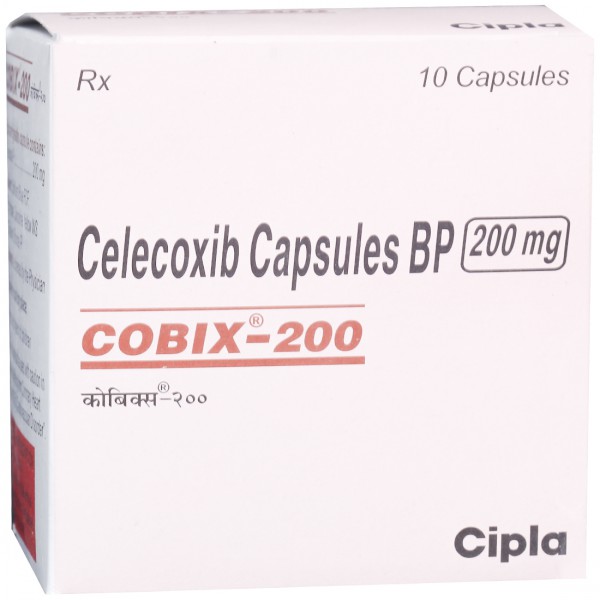
MEDICINE OVERVIEW OF Cobix 200 mg Capsule (10 Cap)
THERAPEUTIC CLASS OF Cobix 200 mg Capsule (10 Cap)
WHY Cobix 200 mg Capsule (10 Cap) IS PRESCRIBED
Substitutes for - Cobix 200 mg Capsule (10 Cap)
HOW IT WORKS
HOW TO TAKE
WHEN TO TAKE
Cobix 200 mg Capsule (10 Cap) Warnings
Precautions of Cobix 200 mg Capsule (10 Cap)
Contraindications of Cobix 200 mg Capsule (10 Cap)
Side Effects of Cobix 200 mg Capsule (10 Cap)
Alcohol Interaction
Food to Avoid
Pregnancy/Lactation Protocol
Storage of Cobix 200 mg Capsule (10 Cap)
- Doctor's Note Required for this item
- Country of Origin: India
- This product is non returnable
- Manufacturer Details
Doctor's Note Required
This product is currently out of stock.
Notify Me
Cobix 200 mg Capsule Overview :
Cobix 200 mg Capsule contains Celecoxib (200 mg), a non-steroidal anti-inflammatory drug (NSAID) belonging to the class of COX-2 inhibitors. It is primarily used to relieve pain, swelling, and inflammation associated with various conditions like osteoarthritis, rheumatoid arthritis, ankylosing spondylitis, and acute pain such as post-surgical discomfort or muscle injuries.
Celecoxib works by selectively blocking the COX-2 enzyme, which plays a major role in the production of prostaglandins, the chemicals responsible for causing pain and inflammation. Unlike traditional NSAIDs, celecoxib targets COX-2 specifically, which helps in reducing pain and swelling with a lower risk of stomach irritation compared to non-selective NSAIDs like ibuprofen or diclofenac.
This medicine provides long-lasting pain relief and improved joint mobility, helping patients maintain a better quality of life while managing chronic inflammatory conditions.
Key Benefits of Cobix 200 mg Capsule :
- Provides effective relief from pain and inflammation associated with arthritis and other joint disorders.
- Improves mobility and flexibility of affected joints.
- Has a lower risk of stomach ulcers and bleeding compared to traditional NSAIDs.
- Useful for short-term management of acute pain and injuries.
- Helps reduce stiffness and discomfort, improving daily activity levels.
- Take exactly as prescribed by your doctor, usually once or twice daily.
- Swallow the capsule whole with a full glass of water.
- It can be taken with or without food, but taking it with food may reduce the chance of stomach upset.
- Do not crush, chew, or open the capsule.
- Take it at the same time each day for maximum benefit.
- Do not exceed the recommended dose or use it for longer than prescribed.
Common or mild side effects may include:
- Stomach discomfort or pain
- Diarrhea or indigestion
- Headache or dizziness
- Swelling of hands, feet, or ankles
- Mild skin rash
Seek immediate medical attention if you experience:
- Signs of an allergic reaction (rash, itching, swelling, severe dizziness)
- Shortness of breath or chest pain
- Unusual weight gain or severe swelling
- Signs of gastrointestinal bleeding (black or tarry stools, vomiting blood)
- Allergies: Do not take if you are allergic to celecoxib, sulfa drugs, or other NSAIDs.
- Heart Patients: Use cautiously if you have heart disease, high blood pressure, or a history of stroke.
- Stomach Problems: Patients with ulcers or gastrointestinal bleeding should inform their doctor before use.
- Kidney or Liver Issues: Dose adjustments may be needed for those with impaired kidney or liver function.
- Pregnancy & Breastfeeding:
- Avoid in the third trimester of pregnancy.
- Use only if clearly needed during other stages of pregnancy or while breastfeeding.
- Alcohol: Limit or avoid alcohol, as it increases the risk of stomach irritation and bleeding.
- Driving/Operating Machines: It may cause dizziness. Avoid activities that require alertness until you know how it affects you.
- Store at room temperature below 30°C (86°F).
- Keep the medicine in a dry place, away from moisture and direct sunlight.
- Always keep out of reach of children and pets.
- Do not use the medicine after the expiry date mentioned on the package.
- Keep capsules in their original blister pack to maintain potency and safety.
1. What is Cobix 200 mg Capsule used for?
Cobix 200 mg is used to relieve pain and inflammation caused by conditions like osteoarthritis, rheumatoid arthritis, ankylosing spondylitis, and acute pain from injuries or surgeries.
2. How does Cobix 200 mg Capsule work?
It works by selectively inhibiting the COX-2 enzyme, which reduces the production of prostaglandins responsible for pain and swelling, thereby providing targeted relief.
3. Can I take Cobix 200 mg Capsule on an empty stomach?
Yes, it can be taken on an empty stomach, but taking it with food may reduce the risk of stomach upset.
4. Is Cobix 200 mg Capsule safe for long-term use?
Long-term use should be carefully monitored by a doctor, as prolonged NSAID use can increase the risk of heart problems, kidney issues, and gastrointestinal bleeding.
5. What should I do if I miss a dose of Cobix 200 mg Capsule?
Take the missed dose as soon as you remember. If it’s almost time for your next dose, skip the missed dose and continue with your regular schedule. Do not double the dose.
6. Can I take Cobix 200 mg Capsule with other painkillers?
Avoid combining Cobix with other NSAIDs (like ibuprofen or diclofenac) unless specifically directed by your doctor, as it may increase the risk of side effects.
7. Is Cobix 200 mg Capsule safe during pregnancy?
No, Cobix should be avoided during the third trimester of pregnancy. During other stages, it should only be used if clearly prescribed by a doctor.
8. Does Cobix 200 mg Capsule cause drowsiness?
It may cause dizziness or mild drowsiness in some individuals. If you experience these effects, avoid driving or operating machinery.
9. How long does Cobix 200 mg Capsule take to show results?
Relief from pain and inflammation can usually be noticed within a few hours, but consistent use as prescribed may be needed for full benefits in chronic conditions.
10. Can Cobix 200 mg Capsule be taken with alcohol?
It’s best to limit or avoid alcohol while taking Cobix, as both alcohol and NSAIDs can irritate the stomach lining and increase the risk of bleeding.
References :
1. U.S. National Library of Medicine – MedlinePlus (Celecoxib). Click Here
2. FDA – Celecoxib Drug Information.
Click Here
3. NHS – Anti-inflammatory Medicines Guide.
Click Here
4. American College of Rheumatology – NSAID Use.
Click Here
Disclaimer: The information on this site is not intended or implied to be a substitute for professional medical advice, diagnosis or treatment. All content, including text, graphics and information, contained on or available through this website is for general information purposes only. SastaSundar.com makes no representation and assumes no responsibility for the accuracy of information contained on or available through this website and such information is subject to change without notice. You are encouraged to confirm any information obtained from or through this web site with other sources and review all information regarding any medical condition or treatment with your physician. NEVER DISREGARD PROFESSIONAL MEDICAL ADVICE OR DELAY SEEKING MEDICAL TREATMENT BECAUSE OF SOMETHING YOU HAVE READ ON OR ACCESSED THROUGH ANY WEBSITE.
SastaSundar.com does not recommend, endorse or make any representation about the efficacy, appropriateness or suitability of any specific products, procedures, treatments, opinions or other information that may be contained on or available through this website.