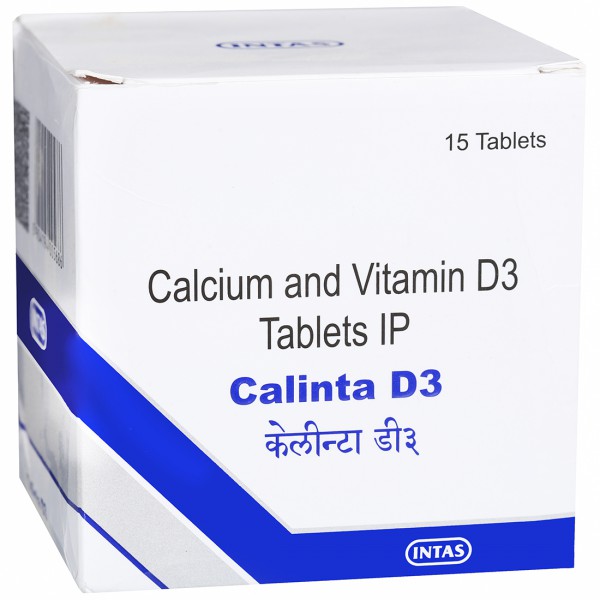
MEDICINE OVERVIEW OF Calinta D3 Tablet (15 Tab)
THERAPEUTIC CLASS OF Calinta D3 Tablet (15 Tab)
WHY Calinta D3 Tablet (15 Tab) IS PRESCRIBED
Substitutes for - Calinta D3 Tablet (15 Tab)
HOW IT WORKS
HOW TO TAKE
WHEN TO TAKE
Calinta D3 Tablet (15 Tab) Warnings
Precautions of Calinta D3 Tablet (15 Tab)
Contraindications of Calinta D3 Tablet (15 Tab)
Side Effects of Calinta D3 Tablet (15 Tab)
Alcohol Interaction
Food to Avoid
Pregnancy/Lactation Protocol
Storage of Calinta D3 Tablet (15 Tab)
- Doctor's Note Required for this item
- Country of Origin: India
- Expires on: Jan 2028
- 14 days Return Policy
- Manufacturer Details
-
Seller Information:
Doctor's Note Required
MRP*:
Rs.174.20
Save 18%
Rs.142.84 (* Inclusive of all taxes)
₹ 9.52/Tablet (inclusive of all taxes)Calinta D3 Tablet Overview:
Calinta D3 Tablet is a combination supplement containing Calcium and Vitamin D3 (Cholecalciferol) that is mainly used to treat or prevent low calcium levels in the body. It is often recommended for individuals whose diet does not provide enough calcium, or whose body requires increased amounts of these nutrients, such as elderly people, pregnant women, or individuals with bone health concerns.
Low levels of calcium and vitamin D3 can lead to bone-related conditions such as osteoporosis (bone thinning) or osteomalacia (soft and weak bones) in adults, and rickets in children. It may also cause symptoms like muscle weakness, fatigue, brittle nails, and an increased risk of fractures. In pregnancy, inadequate calcium levels may affect both maternal and fetal bone health.
Calinta D3 Tablet helps address these deficiencies by providing targeted supplementation. Calcium supports bone structure and strength, while vitamin D3 improves calcium absorption from the intestines and helps its proper use in bone tissue, supporting strong bones, healthy teeth, and overall skeletal health.
Composition:
Each film coated tablet contains- Calcium Carbonate from organic source (Oyster Shell) equivalent to Elemental Calcium: 500 mg, Vitamin D3 (as stabilized form): 500 IU, and Excipients q.s.
Colours: Ferric Oxide Red & Titanium Dioxide
Appropriate overages of vitamin added to compensate loss on storage.
Uses & Benefits of Calinta D3 Tablet:
Calinta D3 Tablet is used to manage and treat conditions related to low calcium levels and Vitamin D3 deficiency, which includes:
- Prevention of Osteoporosis: It helps prevent the loss of bone mineral density and reduces the risk of fractures, particularly in older adults.
- Osteomalacia & Rickets: Softening and weakening of bones due to Vitamin D deficiency. Calinta D3 helps meet the body's requirements to strengthen bone structure.
- Maintenance of Muscle Health: Calinta D3 supports muscle contraction and overall muscle function, helping to reduce the risk of falls and cramps.
- Hypocalcemia: It effectively treats low blood calcium levels, ensuring vital organs and systems function correctly.
- Hypoparathyroidism: It helps manage conditions where the parathyroid glands are underactive, which is crucial for regulating calcium levels and preventing excessive bone resorption.
- Supports the Immune System: Adequate Vitamin D3 levels enhance the immune response, helping the body defend more effectively against infections.
- Support During Pregnancy: It helps meet the increased nutritional demands for the mother and developing baby, supporting fetal skeletal development and reducing the risk of complications like premature birth.
- General Bone & Teeth Health: It provides supplementation essential for individuals with dietary insufficiency. Thus, ensuring long-term skeletal & dental integrity.
How Does Calinta D3 Tablet Work:
Calinta D3 Tablet is formulated with Calcium Carbonate and Vitamin D3 as its active ingredients, which act through a synergistic dual-action mechanism.
Calcium Carbonate directly provides elemental calcium, which is an essential mineral required for building and maintaining bone density, supporting muscle contractions, and facilitating nerve signal transmission. However, calcium alone cannot be efficiently absorbed by the intestine without the presence of Vitamin D3.
Vitamin D3 (Cholecalciferol) plays a critical facilitative role: once ingested, it is converted in the liver and kidneys to its active hormonal form, calcitriol, which then promotes calcium absorption from the gut and reduces calcium loss through the kidneys. This combined action makes Calinta D3 Tablet significantly more effective at improving bone mineral density than calcium alone.
Dosage of Calinta D3 Tablet:
- Usage Direction
Take Calinta D3 Tablet strictly according to your doctor’s instructions, following the prescribed dose and timing. Calinta D3 Tablet should be swallowed whole with water without crushing, chewing, or breaking it, preferably at the same time each day. Do not stop or alter the dose of Calinta D3 Tablet without consulting your doctor, as this may prevent you from achieving the desired outcome. If you are unsure about the administration procedures, consult with your doctor or pharmacist.
- Missed Dose
If you miss a dose of Calinta D3 Tablet, take it as soon as you remember. But, if it is almost time for your next scheduled dose, skip the one you missed and continue following your regular dosing schedule. Do not attempt to take two doses if you have forgotten one.
You can set reminders on your smartphone, keep drug organizer boxes, or use other audio-visual technologies to prevent missing a dose.
- Overdose
If you accidentally take Calinta D3 Tablet more than your prescribed dose, seek immediate medical advice or contact a poison control center. Because overdose may lead to serious side effects, such as hypercalcemia (high blood calcium), frequent urination, loss of appetite, kidney stones, muscle weakness, heart problem, and bone pain. Other symptoms may include nausea, vomiting, constipation, tiredness, weakness, or confusion. If you suspect an overdose, stop taking the supplement immediately and seek emergency medical attention or contact a Poison Control Center.
Contraindications of Calinta D3 Tablet:
Do not take Calinta D3 Tablet if you are hypersensitivity or allergic to Calcium Carbonate, Vitamin D3 (Cholecalciferol), or any of the inactive ingredients in the formulation. It is also contraindicated in individuals with hypercalcaemia (high blood calcium levels), hypervitaminosis D (Vitamin D toxicity), hypercalciuria (excessive calcium in the urine), severe renal impairment or kidney failure, nephrocalcinosis (calcium deposits in the kidneys), or active kidney stones related to calcium. Patients with hyperparathyroidism (overactive parathyroid glands) should avoid using Calinta D3 Tablet unless specifically directed by a physician.
Precautions & Warnings of Calinta D3 Tablet:
Before starting Calinta D3 Tablet, inform your doctor about all existing medical conditions, especially kidney disease, kidney stones, heart disease, sarcoidosis, or any condition that causes elevated blood calcium. Regular monitoring of blood calcium and Vitamin D levels may be recommended by your doctor during long-term therapy. Avoid taking other over-the-counter supplements containing calcium, Vitamin D, phosphorus, or magnesium without consulting your healthcare provider, as combined use may lead to dangerously high calcium levels. Patients with reduced kidney function require careful dose adjustment and close monitoring. Avoid prolonged use without medical supervision.
Side Effects of Calinta D3 Tablet:
Calinta D3 Tablet may cause some side effects, most people do not experience side effects if taken at the recommended dose. Some side effects are uncommon, which include hypercalcaemia and hypercalciuria. Symptoms of these conditions include nausea, vomiting, constipation or bloating, abdominal pain, muscle weakness, fatigue, bone pain, mental confusion, and increased thirst (polydipsia) or frequent urination (polyuria). However, if these side effects persist, consult your doctor as soon as possible. Additionally, seek immediate medical attention if you experience signs of a serious allergic reaction, such as swelling of the lips, tongue, face, or throat, or difficulty breathing.
Safety Related Concerns of Calinta D3 Tablet:
- Pregnancy
If you are pregnant or planning to conceive, consult your doctor before taking Calinta D3 Tablet. Your doctor will determine whether supplementation is needed to meet increased nutritional demands during pregnancy. Inform your healthcare provider if you are already taking other calcium or vitamin D supplements to avoid excessive intake, as too much vitamin D may be harmful to the developing fetus.
- Breastfeeding
Consult your doctor before taking Calinta D3 Tablet while breastfeeding. Calcium and Vitamin D3 can pass into breast milk, but they are important nutrients for the infant. Your doctor will determine the appropriate dose to ensure the total intake from the supplement and breast milk remains safe for the baby. Also inform your healthcare provider if the child is receiving other vitamin D supplements to avoid excess intake.
- Alcohol
While alcohol does not have a direct interaction with Calinta D3, it is highly recommended to avoid it during treatment. Because, heavy alcohol consumption can decrease calcium absorption.
- Food Interactions
Calinta D3 Tablet is typically recommended to be taken with food or as directed by the physician for maximum effectiveness. Avoid foods that are high in phytic acid (like whole grains or cereals), as well as those rich in oxalic acid (spinach, rhubarb), as they can reduce absorption. To effectively utilize Calinta D3, you can include dairy-based, soy-based, or nut-based products in your regular diet for better calcium and vitamin D absorption.
- Drug Interactions
Calinta D3 Tablet can interact with various medications, either by compromising their therapeutic effectiveness or increasing the risk of mineral toxicity. It is essential to inform your doctor if you are taking thiazide diuretics, as these can reduce calcium excretion and lead to elevated blood calcium levels. Conversely, certain drugs such as oral steroids, orlistat, and anti-seizure medications like phenytoin or barbiturates can significantly hinder the absorption of both calcium and Vitamin D3.
Furthermore, because calcium can bind to other substances in the gut and prevent them from entering the bloodstream, a 2-hour gap should be maintained between taking Calinta D3 and medications such as thyroxine, bisphosphonates, and antibiotics (like quinolones or tetracyclines). The same instruction applies to supplements containing iron, zinc, fluoride, or strontium ranelate to ensure all treatments remain fully effective.
Always inform your healthcare provider and pharmacist about all medications you are taking, including prescription drugs, over-the-counter medications, vitamins, and mineral supplements, to avoid potential interactions.
- Using Machinery & Driving
Calinta D3 Tablet does not typically impair alertness, concentration, or motor coordination, so it is considered safe for activities such as driving a vehicle or operating heavy machinery. However, if you experience any unusual symptoms such as dizziness, confusion, or extreme weakness stop and check with your doctor before continuing activities.
Storage of Calinta D3 Tablet:
Store protected from light and moisture. Keep medicine out of the reach of children. Do not share your medicine with someone else having the same symptoms as you, as the drug requires a prescription. Avoid using it after the expiry date, printed on the packaging. Dispose of expired or unused medication properly; do not throw it away casually.
Additional Information:
- Calinta D3 Tablet is intended to supplement dietary intake of calcium and vitamin D, but it should not replace a balanced diet. Adequate sunlight exposure, regular physical activity, and a healthy diet rich in calcium-containing foods can help maintain bone health.
- Regular blood tests to monitor serum calcium and Vitamin D3 levels are advisable for patients on long-term Calinta D3 therapy, especially those with kidney disease or other chronic conditions.
Do not share your medicine with someone else having the same symptoms as you, as the drug requires a prescription.
Frequently Asked Questions (FAQs)-
Q. Why is Calinta D3 Tablet used?
A: Calinta D3 Tablet is used to prevent and treat deficiencies of Calcium and Vitamin D3. It is prescribed for conditions like osteoporosis (weak, brittle bones), rickets in children, osteomalacia (soft bones in adults), and low blood calcium levels (hypocalcaemia). It is also used as a daily supplement for groups at higher risk of deficiency, including postmenopausal women, older adults, pregnant or breastfeeding women, and individuals who spend little time outdoors.
Q. How should I take Calinta D3 Tablet?
A: Take Calinta D3 Tablet by mouth, with food, as directed by your doctor. Taking it with a meal helps improve calcium absorption. Swallow the tablet whole with a glass of water unless it is a chewable formulation. Try to take it at the same time every day. Do not take more than the recommended dose, and avoid taking other calcium or Vitamin D supplements at the same time unless your doctor approves.
Q. Can I take Calinta D3 Tablet during pregnancy?
A: Yes, Calinta D3 Tablet can be taken during pregnancy, but only if recommended by your doctor. Calcium and Vitamin D3 help support the healthy development of the baby’s bones and teeth and maintain the mother’s bone health. However, the dosage should not exceed the amount prescribed, as excessive vitamin D may be harmful to the developing fetus. Always consult your doctor before starting this supplement.
Q. What should I avoid while taking Calinta D3 Tablet?
A: If you are taking Calinta D3 Tablet, avoid taking other vitamin D, calcium supplements, herbal products, or other medicines without consulting your healthcare provider first. Certain foods, such as spinach, sorrel, and rhubarb, as well as those containing phytic acid, can affect calcium levels and their absorption.
Q. Can I take Calinta D3 Tablet with milk?
A: Yes, Calinta D3 Tablet can be taken with milk. In fact, taking this supplement with dairy can be beneficial because the fats in milk can help with the absorption of Vitamin D3, which is a fat-soluble vitamin. Additionally, milk provides an extra source of dietary calcium and phosphorus, which work together with the tablet to support bone mineral density and skeletal integrity.
Q. Can Calinta D3 Tablet cause kidney stones?
A: No, Calinta D3 Tablet does not directly cause kidney stones when taken at the recommended dosage. However, if taken excessively or without medical supervision, it can lead to hypercalcemia (abnormally high levels of calcium in the blood).
When calcium levels in the blood are persistently high, the kidneys have to work harder to filter out the excess, which is then released in the urine (hypercalciuria). This creates a situation where calcium crystals can gather and harden into stones. To minimize this risk, always follow the prescribed dosage and ensure you stay well-hydrated to help your kidneys effectively flush out minerals.
Q. Is Calinta D3 Tablet safe for long-term use?
A: Calinta D3 Tablet should only be taken for the specific duration prescribed by your healthcare provider. While it is often used for extended periods to manage chronic conditions like osteoporosis, long-term therapy must be conducted under strict medical supervision. Extended use without monitoring can lead to mineral imbalances. Therefore, long-term treatment typically involves periodic blood tests to monitor levels of calcium and Vitamin D3, as well as regular check-ups to evaluate kidney function. This ensures that the dosage remains within a safe therapeutic range and prevents complications such as kidney stones, hypervitaminosis, or hypercalcemia.
Reference:
1. For the use only of a Registered Medical Practitioner or a Hospital or a Laboratory Only. SHELCAL 500. Last Revised: May 2022. Accessed on: 13th March 2026. Click Here
2. PATIENT INFORMATION LEAFLET Adcal-D3® Caplets 750mg/200I.U. Film coated tablets Calcium carbonate and colecalciferol (vitamin D3). Last Revised: November 2025. Accessed on: 13th March 2026. Click Here
3. Package leaflet: Information for the patient. CALVIDIN 600 mg/400 I.U. chewable tablets. Calcium carbonate and Cholecalciferol. Last Revised: September 2024. Accessed on: 13th March 2026. Click Here
4. Patient Information Leaflet. (OSTOCALCIUM PLUS CHEWABLE TABLETS). Last Revised: September 2024. Accessed on: 13th March 2026. Click Here

Disclaimer: The information on this site is not intended or implied to be a substitute for professional medical advice, diagnosis or treatment. All content, including text, graphics and information, contained on or available through this website is for general information purposes only. SastaSundar.com makes no representation and assumes no responsibility for the accuracy of information contained on or available through this website and such information is subject to change without notice. You are encouraged to confirm any information obtained from or through this web site with other sources and review all information regarding any medical condition or treatment with your physician. NEVER DISREGARD PROFESSIONAL MEDICAL ADVICE OR DELAY SEEKING MEDICAL TREATMENT BECAUSE OF SOMETHING YOU HAVE READ ON OR ACCESSED THROUGH ANY WEBSITE.
SastaSundar.com does not recommend, endorse or make any representation about the efficacy, appropriateness or suitability of any specific products, procedures, treatments, opinions or other information that may be contained on or available through this website.