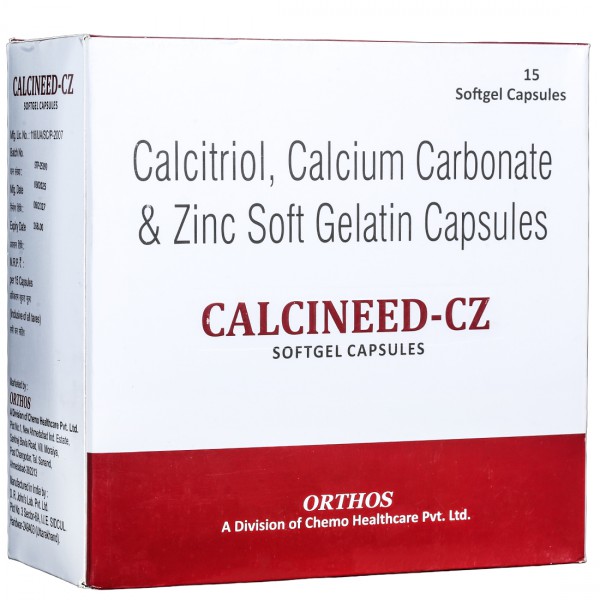
MEDICINE OVERVIEW OF Calcineed CZ Softgel Capsule (15 Cap)
THERAPEUTIC CLASS OF Calcineed CZ Softgel Capsule (15 Cap)
WHY Calcineed CZ Softgel Capsule (15 Cap) IS PRESCRIBED
Substitutes for - Calcineed CZ Softgel Capsule (15 Cap)
HOW IT WORKS
HOW TO TAKE
WHEN TO TAKE
Calcineed CZ Softgel Capsule (15 Cap) Warnings
Precautions of Calcineed CZ Softgel Capsule (15 Cap)
Contraindications of Calcineed CZ Softgel Capsule (15 Cap)
Side Effects of Calcineed CZ Softgel Capsule (15 Cap)
Alcohol Interaction
Food to Avoid
Pregnancy/Lactation Protocol
Storage of Calcineed CZ Softgel Capsule (15 Cap)
- Doctor's Note Required for this item
- Country of Origin: India
- Expires on: Aug 2027
- This product is non returnable
- Manufacturer Details
-
Seller Information:
Doctor's Note Required
MRP*:
Rs.168.00
50% OFF
Rs.84.00 (* Inclusive of all taxes)
₹ 5.60/Capsule (inclusive of all taxes)Calcineed CZ Softgel Capsule Overview:
Calcineed CZ Softgel Capsule is a nutritional supplement designed to treat and manage calcium, vitamin D, and zinc deficiencies.
It is commonly prescribed for preventing and treating bone-related conditions, including postmenopausal osteoporosis, renal osteodystrophy (low calcium in patients on dialysis for chronic kidney failure), osteomalacia, rickets, and hypocalcemia caused by hypoparathyroidism.
It is also used for low calcium levels resulting from an underactive parathyroid gland or following parathyroid surgery.
By delivering an active form of vitamin D alongside an easily absorbable mineral matrix, Calcineed CZ Softgel Capsule supports the restoration of healthy bone mineral density, helps strengthen the skeletal system, and contributes to overall metabolic balance.
Composition:
Each soft gelatin capsules contains- Calcitriol: 0.25 mcg, Calcium Carbonate: 500 mg (equivalent to elemental Calcium 200 mg), Zinc (as Zinc Sulphate Monohydrate): 7.5 mg, and Excipients q.s.
Approved colour used in soft gelatin capsule shell.
Appropriate overages added to compensate for loss on storage.
Uses & Benefits of Calcineed CZ Softgel Capsule:
The therapeutic uses and benefits of Calcineed CZ Softgel Capsule include:
- Supports the treatment of osteoporosis, including bone loss in postmenopausal women and in men.
- Helps manage osteomalacia and rickets, conditions where bones become soft and weak
- Corrects low calcium levels linked to hypoparathyroidism or following parathyroid gland surgery
- Assists people undergoing dialysis for chronic kidney disease by helping to control elevated parathyroid hormone levels
- Supports bone health in people with malabsorption-related osteomalacia or after certain bowel surgeries
- Provides zinc to improve the body's response to calcitriol and further support bone strength
- May help manage psoriasis symptoms as part of a broader treatment plan, as guided by a doctor
How Does Calcineed CZ Softgel Capsule Work:
Calcineed CZ Softgel Capsule works through the complementary action of its three active ingredients—Calcitriol, Calcium Carbonate, and Zinc—to maintain bone health and treat severe calcium and parathyroid-related disorders.
Calcitriol, the active form of Vitamin D3, binds to vitamin D receptors to directly enhance the intestinal absorption of dietary calcium and phosphate into the bloodstream while reducing calcium loss in the kidneys.
Calcium Carbonate supplies elemental calcium, which serves as the essential building block required to build, repair, and maintain strong bones and teeth.
Concurrently, Zinc stimulates bone-forming cells (osteoblasts), inhibits bone-resorbing cells (osteoclasts), and acts as an essential cofactor in tissue repair, bone matrix mineralization, and the optimization of the body's clinical response to oral calcitriol.
Dosage of Calcineed CZ Softgel Capsule:
- Usage Directions
Take Calcineed CZ Softgel Capsule strictly according to your doctor’s instructions, following the prescribed dose and timing. Calcineed CZ Softgel Capsule should be swallowed whole with water and not chewed, cut, or crushed, preferably at the same time each day. Do not stop or alter the dose of Calcineed CZ Softgel Capsule without consulting your doctor, as this may prevent you from achieving the desired outcome. If you aren't sure how to take Calcineed CZ, check with your healthcare provider or pharmacist for instructions.
- Missed Dose
If you miss a dose of Calcineed CZ Softgel Capsule, take it as soon as you remember on the same day. But if it is almost time for your next scheduled dose, skip the missed one and continue following your regular dosing schedule. Do not take double doses in case if you have forgotten one.
If you often forget to take your medication, you can set reminders on your smartphone, keep drug organizer boxes, or use other audio-visual technologies to prevent missing a dose.
- Overdose
In case of an accidental or intentional overdose of Calcineed CZ Softgel Capsule, seek immediate medical attention or contact a poison control center right away. Excessive intake can lead to hypercalciuria, hyperphosphataemia, or elevated blood calcium levels (hypercalcemia), causing severe nausea, vomiting, dehydration, or kidney complications.
Contraindications of Calcineed CZ Softgel Capsule:
Do not take Calcineed CZ Softgel Capsule if you have a known allergy or hypersensitivity to Calcitriol, Calcium, Zinc, or any of the inactive ingredients in this medication.
It should also not be taken by individuals with hypercalcemia (elevated blood calcium concentrations), hypercalciuria (excess calcium excretion in the urine), or hypervitaminosis D (vitamin D toxicity), as this medication may worsen these conditions and lead to serious health complications.
Precautions & Warnings of Calcineed CZ Softgel Capsule:
Before starting Calcineed CZ Softgel Capsule, inform your healthcare provider about your complete medical history. Special caution is advised for individuals with a history of heart disease, hepatic dysfunction, nephrolithiasis (kidney stones), or renal impairment.
Periodic monitoring of serum calcium, serum phosphate, and kidney function parameters is recommended during treatment.
Additionally, elderly patients may require careful dosage evaluation and adjustment, as they face a higher risk of age-related renal, hepatic, or cardiovascular complications.
Side Effects of Calcineed CZ Softgel Capsule:
While Calcineed CZ Softgel Capsule is generally well-tolerated, it may cause side effects in some individuals, which are often similar to symptoms of elevated vitamin D levels. Early symptoms of side effects include headache, weakness, constipation, nausea, vomiting, muscle or bone pain, a metallic taste, and dry mouth.
Whereas the late symptoms might become serious and require immediate medical intervention. These include polydipsia (excessive thirst), polyuria (frequent urination), loss of appetite, unexplained weight loss, pancreatitis, hypertension, cardiac arrhythmias, and severe allergic reactions (such as skin rash, intense itching, facial or throat swelling, and breathing difficulties).
Safety Related Concerns of Calcineed CZ Softgel Capsule:
- Pregnancy
Calcineed CZ Softgel Capsule should generally be avoided during pregnancy unless specifically prescribed by a doctor, as limited safety data are available on pregnant women. If you are pregnant or expecting to conceive, consult your healthcare provider to carefully evaluate the therapeutic benefits against potential risks to the developing fetus.
- Breastfeeding
It is best to avoid using Calcineed CZ Softgel Capsule while breastfeeding, as its active component, Calcitriol, can pass into breast milk. If prescribed, consult your physician, as close monitoring of serum calcium levels in both the mother and the infant may be required.
- Alcohol
Avoid or limit alcohol consumption while taking Calcineed CZ Softgel Capsule, as high consumption interferes with intestinal calcium absorption.
- Food Interactions
Calcineed CZ Softgel Capsule can be taken with or after a meal, as prescribed by your physician. However, consuming it alongside foods high in oxalates (such as spinach and rhubarb), phytates (found in whole grains and brown bread), or specific proteins can impair the intestinal absorption of both calcium and zinc.
Drug Interactions
Calcineed CZ Softgel Capsule may interact with certain medications either by reducing its effectiveness or increasing the risk of side effects. Concurrent administration with magnesium-containing antacids and calcitriol may cause hypermagnesemia.
Concomitant use with digitalis (such as digoxin) must be avoided, as elevated calcium levels significantly increase the risk of cardiac arrhythmias.
Furthermore, dosage adjustments are necessary when co-administered with barbiturates or anticonvulsants due to altered vitamin D metabolism.
Other drugs known to interact include corticosteroids, cholestyramine, calcium channel blockers, estrogens, phenytoin, supplemental calcium, and antibiotics like tetracyclines and fluoroquinolones (which require spaced dosing to prevent impaired absorption).
Always provide your doctor with a complete list of all prescription medications, over-the-counter products, and supplements before starting treatment.
- Using Machinery & Driving
There is no significant impact on your ability to drive or operate machinery while taking Calcineed CZ Softgel Capsule.
Storage of Calcineed CZ Softgel Capsule:
Store protected from lights, heat & moisture, at a temperature not exceeding 25°C. Keep the medicine out of reach of children.
Discard and do not take this medication after the expiration date printed on the package. It is important to dispose of expired or unused medications properly; do not throw it away casually.
Helpful Tips:
- Take Calcineed CZ Softgel Capsule regularly and follow the dose prescribed by your doctor.
- Do not add another calcium or vitamin-D supplement on your own.
- Keep scheduled blood-test appointments, particularly if you are receiving dialysis or your dose has recently been changed.
- Inform your doctor about kidney problems, pregnancy, breastfeeding and all medicines or supplements you take.
- Learn to recognize possible symptoms of high calcium, such as unusual thirst, frequent urination, nausea, constipation, weakness or confusion.
- A balanced diet and appropriate physical activity may complement medical management of bone health.
- Do not stop taking the drug abruptly, as this can trigger withdrawal symptoms like headaches, dizziness, or irritability.
- Never share this medication with anyone else, even if they have the same symptoms.
Frequently Asked Questions (FAQs):
Q: Why did my doctor prescribe Calcineed CZ Softgel Capsule?
A: Your doctor prescribed Calcineed CZ Softgel Capsule to treat or prevent calcium and vitamin D deficiencies, or to manage an underlying metabolic bone disorder such as osteoporosis or osteomalacia.
Q: Can I take Calcineed CZ Softgel Capsule daily?
A: Yes, you can take it daily, but only if specifically prescribed by your physician. The exact dosage and duration of treatment should always follow your doctor's instructions to ensure safety and effectiveness.
Q: What should I do if I experience constipation?
A: Constipation is a known side effect associated with calcium carbonate supplementation. To help manage this, increase your daily fluid intake and incorporate more fiber-rich foods into your diet. If constipation persists or becomes uncomfortable, consult your physician for guidance.
Q: How long do I need to take Calcineed CZ Softgel Capsule?
A: The duration of treatment depends on your specific condition, baseline calcium levels, and overall response to therapy. Take this medication for as long as your doctor recommends, and do not stop treatment early without consulting them.
Q: Why do I need blood or urine tests while taking this medication?
A: Periodic blood and urine tests are necessary to monitor your serum calcium, phosphate, and kidney function parameters. This ensures the dose is effective and prevents complications like hypercalcemia or kidney stone formation.
Q: Is it safe to take Calcineed CZ Softgel Capsule with other calcium or vitamin products?
A: You should avoid taking additional calcium, vitamin D, or multivitamin supplements unless explicitly instructed by your physician. Combining them can lead to abnormally high calcium levels in the blood (hypercalcemia) or vitamin D toxicity.
References:
1. GEMITROL (Calcitriol, Calcium Carbonate and Zinc Capsules). Accessed on: 19th August 2026. Click Here
2. CALZEM Capsules. Calcitriol + Calcium carbonate + Zinc. Prescribing information. Last Revised: November 2013. Accessed on: 19th August 2026. Click Here
3. CETJOINT SG. Accessed on: 19th August 2026. Click Here

Disclaimer: The information on this site is not intended or implied to be a substitute for professional medical advice, diagnosis or treatment. All content, including text, graphics and information, contained on or available through this website is for general information purposes only. SastaSundar.com makes no representation and assumes no responsibility for the accuracy of information contained on or available through this website and such information is subject to change without notice. You are encouraged to confirm any information obtained from or through this web site with other sources and review all information regarding any medical condition or treatment with your physician. NEVER DISREGARD PROFESSIONAL MEDICAL ADVICE OR DELAY SEEKING MEDICAL TREATMENT BECAUSE OF SOMETHING YOU HAVE READ ON OR ACCESSED THROUGH ANY WEBSITE.
SastaSundar.com does not recommend, endorse or make any representation about the efficacy, appropriateness or suitability of any specific products, procedures, treatments, opinions or other information that may be contained on or available through this website.